
In the realm of modern laboratory practices, the importance of stringent biosafety measures and efficient sterilization workflows cannot be overstated. In laboratories across France, from bustling university teaching labs to high-security BSL-3 microbiology facilities, professionals face challenges in ensuring contamination control while maximizing operational efficiency. Enter the Micro Incinerator or Infrared Inoculating Loop Sterilizer, a revolutionary piece of laboratory sterilization equipment that is redefining standards for safety and precision.
Understanding the Technical Principles
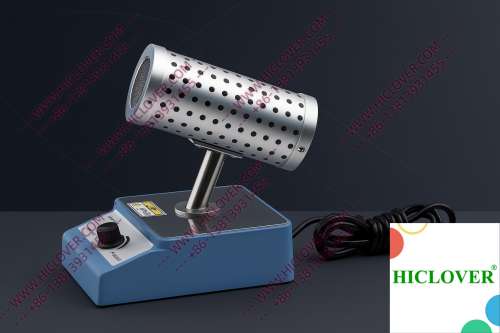
The Micro Incinerator utilizes infrared heat, a method that presents numerous advantages over traditional flame sterilizers like alcohol lamps and Bunsen burners. With its enclosed ceramic tube, this device achieves rapid thermal sterilization, ensuring that inoculating loops and other reusable tools are effectively disinfected. The infrared heating element generates high temperatures that decompose any microbial contaminants present on laboratory instruments. Unlike flame-based methods, this technology offers an aerosol-free handling mechanism that protects laboratory personnel from inhalation risks.
Advantages Over Traditional Flame Sterilizers
The Micro Incinerator boasts several key advantages compared to traditional flame sterilizers:
- Enhanced Safety: No open flames significantly reduce the risk of fire hazards in clean environments.
- Efficient Space Utilization: The compact design allows for easy placement within biosafety cabinets.
- Quick Operation: Faster sterilization cycles mean less downtime between experiments.
- Consistent Performance: Infrared heat provides uniform temperature distribution, ensuring thorough disinfection.
Application Scenarios in Real Labs
From academic institutions to research centers, the versatile Micro Incinerator is deployed across various laboratory settings. Here are two specific application scenarios:
1. University Teaching Labs
In a university microbiology curriculum, students frequently work with inoculating loops. The Micro Incinerator facilitates safe practice by providing an instant sterilization method that inoculates samples without the risk of cross-contamination. Instructors can focus on educational content rather than worrying about student safety around open flames. Moreover, the compact design allows it to fit seamlessly into biosafety cabinets, maximizing the use of limited space.
2. Clinical Diagnostics in BSL-2 Labs
Clinical laboratories often handle hazardous pathogens under BSL-2 protocols that require strict adherence to biosafety standards. The Micro Incinerator’s enclosed ceramic tube ensures that pathogens do not escape into the laboratory environment, making it an ideal choice for working within high-containment biosafety cabinets. This feature not only enhances safety but also aligns with guidelines set forth by the World Health Organization for handling infectious materials safely.
Compliance with Biosafety Standards
Adhering to biosafety standards is non-negotiable in laboratory settings. Instruments like the Micro Incinerator play a pivotal role in ensuring compliance with WHO biosafety guidelines and local lab sterilization standards specific to France. Notably, the absence of an open flame makes it suitable for use in clean rooms where traditional flame sterilizers would be disallowed due to their contamination risk. Laboratories using this equipment can significantly decrease the likelihood of aerosol generation, thereby promoting a cleaner working environment.
Comparing Micro Incinerators and Traditional Flame Burners
| Feature | Micro Incinerator | Flame Burners |
|---|---|---|
| Safety | No open flame; minimizes fire risk | Open flame; potential fire hazards |
| Ease of Use | One-button operation | Requires careful flame management |
| Speed | Rapid thermal sterilization in seconds | Variable, dependent on flame settings |
| Portability | Compact and lightweight | Can be bulky and less portable |
FAQs
Here are some frequently asked questions surrounding Micro Incinerators:
- What is a Micro Incinerator?
It is an infrared inoculating loop sterilizer designed for safe, rapid, and efficient thermal sterilization. - Can the Micro Incinerator be used in a BSL-3 lab?
Yes, it is suitable for BSL-2 and BSL-3 labs that adhere to strict biosafety and contamination control standards. - How does infrared sterilization work?
The device heats an enclosed ceramic tube that provides rapid and high-temperature disinfection. - Is there a risk of aerosol generation with the Micro Incinerator?
No, the design minimizes any aerosol creation, enhancing safety during sterilization. - What makes it a better choice than traditional flame sterilizers?
It provides superior safety, speed, and compliance without the hazards associated with open flames.
Conclusion
The advent of the Micro Incinerator has marked a significant transformation in laboratory sterilization practices, especially within French laboratories focused on maintaining the highest safety standards. Its blend of efficiency, safety, and compliance with biosafety regulations makes it an essential tool in various laboratory environments, from teaching settings to specialized clinical diagnostics. For laboratories looking to enhance their sterilization processes, investing in a Micro Incinerator is a prudent choice. For more information or to make a purchase, do not hesitate to reach out and explore how this innovative sterilization equipment can meet your needs.
Categories:
Tags: