
In the evolving landscape of laboratory biosafety, the need for efficient and reliable sterilization methods has never been more important. Laboratories face significant challenges in maintaining sterile workflows, particularly in handling inoculating loops and other reusable instruments. Traditional flame sterilizers like alcohol lamps and Bunsen burners may not meet the stringent requirements for contamination control, especially in sensitive environments such as BSL-2 and BSL-3 microbiology labs. Fortunately, innovations like the Micro Incinerator, also known as the Infrared Inoculating Loop Sterilizer, are setting a new standard in sterilization technology.
Technical Principles of Compact Loop Incineration Technology
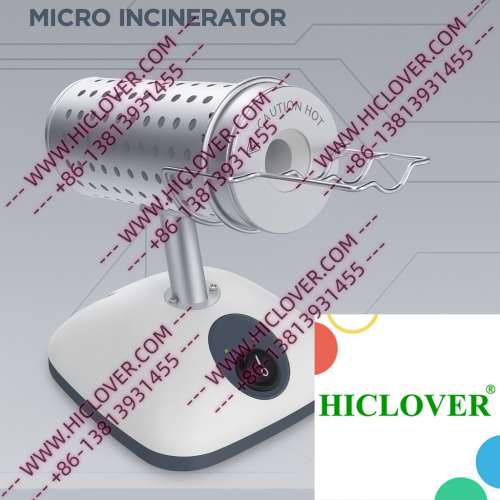
The innovative design of the Micro Incinerator employs infrared heat generated within an enclosed ceramic heating chamber. This system allows for rapid thermal sterilization, achieving high temperatures almost instantly, which leads to efficient disinfection of inoculating loops and other lab tools. Unlike traditional flame-based methods, which can create a risk of aerosol generation and contamination in clean environments, this technology provides a clean-bench-safe solution that is essential in today’s biosafety-compliant laboratories.
Applications in Real Labs
1. Teaching Laboratories
In university teaching labs, where students are learning essential microbiology and laboratory techniques, the need for a safe and effective sterilization method is crucial. The Micro Incinerator allows for quick and easy sterilization of inoculating loops between uses, making it an ideal choice for educational environments. It minimizes the risk associated with open flames, ensuring that students can focus on learning without distraction from safety concerns.
2. Field Testing Laboratories
Field testing laboratories present a different set of challenges where portability and efficiency are key. The Micro Incinerator can be transported easily and used in various outdoor settings, significantly enhancing the capability of researchers to conduct microbial sampling without the traditional limitations of flame sterilizers. This is particularly advantageous in regions where access to electrical power may be limited—many models are designed for battery operation, adding an essential layer of flexibility for fieldwork.
Compliance and Environmental Considerations
Adhering to WHO biosafety standards and lab sterilization protocols is vital for any laboratory engaged in medical or scientific research. Traditional flame sterilizers can pose challenges in compliance due to the open flame, which is unsuitable for clean rooms and other sensitive environments where vapor emissions and aerosols can compromise experiments. On the other hand, the Micro Incinerator operates efficiently without the risks associated with open flames. This technology aligns with international lab sterilization standards, making it a logical choice for those seeking to enhance compliance while improving overall laboratory safety.
Comparison: Micro Incinerator vs. Traditional Flame Burners
| Feature | Micro Incinerator | Flame Burners |
|---|---|---|
| Heat Source | Infrared | Open flame |
| Aerosol Control | Yes | No |
| Portability | High | Moderate |
| Compliance | Meets WHO standards | Potential safety violations |
| Operational Cost | Low (electricity, battery) | Variable (fuel) |
Frequently Asked Questions
- Why should I switch to a Micro Incinerator from a traditional flame sterilizer?
This technology offers rapid sterilization without the risks associated with flames, leading to a safer and more compliant laboratory environment. - Can the Micro Incinerator be used in field testing?
Yes, many models are portable and battery-operated, making them suitable for outdoor applications. - What are the operating costs associated with a Micro Incinerator?
They are typically low, usually requiring only electricity or battery power, unlike flame burners which require fuel. - Is the Micro Incinerator compliant with global biosafety standards?
Absolutely, it meets WHO biosafety and lab sterilization standards, making it an excellent choice for BSL-2 and BSL-3 labs. - How fast can the Micro Incinerator sterilize instruments?
It achieves high temperatures almost instantly, allowing for quick sterilization between uses.
Conclusion
As laboratory environments increasingly prioritize safety and efficiency, the transition from traditional flame sterilizers to advanced technologies like the Micro Incinerator is proving essential. Offering superior compliance with international biosafety standards, rapid thermal sterilization, and a compact design that suits various applications—from teaching labs to field testing—the Micro Incinerator stands out as a new benchmark in laboratory sterilization equipment.
For laboratories looking to enhance their sterilization processes while maintaining a high level of biosafety, investing in the Micro Incinerator is a forward-thinking solution. Contact us to learn more about our range of products and how they can satisfy your laboratory sterilization needs.
Categories:
Tags: