
In modern laboratories across Canada, the challenges of biosafety and efficient sterilization have never been more pressing. With a heightened focus on contamination control and rapid thermal sterilization, the adoption of Micro Incinerators, particularly the Infrared Inoculating Loop Sterilizer, has emerged as an essential solution. This advanced technology offers significant advantages over traditional flame sterilizers, providing clean-bench-safe operations necessary for various lab environments.
Practical Laboratory Biosafety Challenges
Biosafety cabinets, clinical diagnostics spaces, and teaching laboratories encounter unique sterilization workflow demands. The requirement for efficient yet safe sterilization methods has made it crucial for laboratories to adapt to equipment that reduces the risk of contamination while maximizing productivity. Traditional methods, such as Bunsen burners or alcohol lamps, come with inherent risks, including flame hazards and the production of toxic fumes. As such, the need for environmentally responsible alternatives is more vital than ever.
Technical Principles of Micro Incinerators
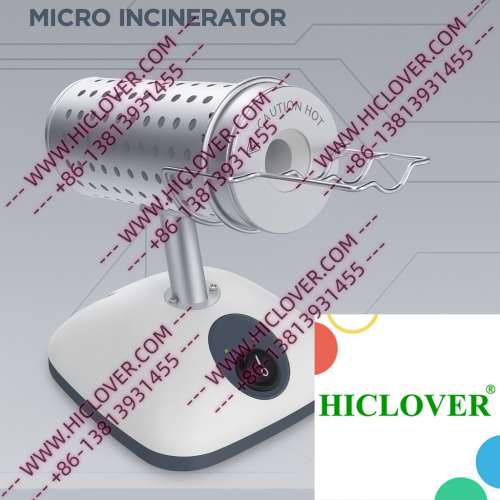
Micro Incinerators operate on the principle of infrared high-temperature disinfection. The enclosed ceramic tube emits uniform infrared heat, which quickly sterilizes inoculating loops, needles, and other laboratory instruments. This method offers rapid thermal sterilization that is both efficient and effective, allowing laboratory personnel to maintain high levels of aseptic technique without the drawbacks associated with flame-based sterilization.
Key Features of Micro Incinerators
- Compact Design: Easy to integrate into limited lab spaces.
- Safety: Flame-free operation minimizes risk.
- Energy Efficiency: Reduces overall power consumption.
- Ease of Use: Simple controls for rapid sterilization cycles.
- Durability: Long-lasting components with minimal maintenance.
Application Scenarios in Real Labs
Biosafety Cabinet Applications
In BSL-2 and BSL-3 microbiology labs, where stringent biosafety measures are imperative, the Micro Incinerator provides a clean, efficient method for sterilizing tools used during experiments. When working with pathogens, any open flame poses a risk of contamination; the infrared sterilizer allows researchers to operate within a sterile environment, ensuring that all instruments are effectively sanitized before use.
Teaching Labs and Field Testing
Teaching laboratories in universities across Canada are also leveraging Micro Incinerators for instructional purposes. Students can learn the essentials of microbiological techniques safely, emphasizing contamination control without the hazards of flame sterilization. Similarly, in mobile or field testing labs, where environmental conditions may be unpredictable, the Micro Incinerator offers a portable and reliable sterilization option, critical for ensuring sample integrity during examinations in varied environments.
Compliance with Biosafety Standards
Adhering to global biosafety standards is mandatory for laboratory operations. The World Health Organization (WHO) underscores the importance of sterilization methods that minimize aerosol production and enhance safety protocols. Regulations stipulated for sterilization processes, such as the ISO 15189 and CLSI standards, necessitate the use of safe and efficient sterilization devices. Unlike traditional flame methods, which can produce harmful particles and are unsuitable for clean rooms, Micro Incinerators comply with the requirements for non-flame-based sterilization operations, making them a more environmentally responsible choice for today’s labs.
Advantages of Micro Incinerators Over Traditional Flame Sterilizers
| Feature | Micro Incinerator | Flame Sterilizer |
|---|---|---|
| Safety | No flame, low risk of fire hazards | Open flame, higher risk of accidents |
| Efficiency | Rapid thermal sterilization | Slower heating times |
| Environmental Impact | Minimizes air contaminants | Produces fumes and particulates |
Frequently Asked Questions (FAQs)
- What is a Micro Incinerator used for?
Micro Incinerators are used for rapid sterilization of inoculating loops and other laboratory instruments, providing a flame-free alternative to traditional sterilization methods. - How long does it take to sterilize instruments?
The sterilization process typically takes just a few seconds, greatly improving efficiency compared to flame-based sterilization. - Are Micro Incinerators suitable for BSL-3 labs?
Yes, Micro Incinerators are specifically designed to meet the needs of high-biosafety laboratories, providing a safe and effective sterilization method. - What are the maintenance requirements for a Micro Incinerator?
Micro Incinerators require minimal maintenance; routine cleaning of the ceramic tube is typically sufficient to ensure optimal performance. - Can these devices be used for field testing?
Absolutely! Micro Incinerators are portable and can be used in various settings, including mobile labs for field testing and environmental sampling.
Conclusion
As laboratories across Canada prioritize efficiency alongside environmental responsibility, Micro Incinerators, like the Infrared Inoculating Loop Sterilizer, offer an innovative solution. Resulting in rapid thermal sterilization with minimal ecological impact, Micro Incinerators seamlessly enhance workflow while ensuring compliance with biosafety standards. To learn more about integrating this advanced sterilization technology into your laboratory, or to make a purchase, please contact us today!
Categories:
Tags: