
In Cameroon, where waste management remains a significant challenge, particularly in healthcare settings, the practical demands of laboratory biosafety pose urgent concerns. Issues such as cross-contamination and improper waste disposal directly impact public health and environmental sustainability. To address these challenges, portable micro incinerators are proving to be essential tools not only for sterilizing laboratory instruments but also for contributing to sustainable waste disposal practices.
Understanding the Micro Incinerator Principle
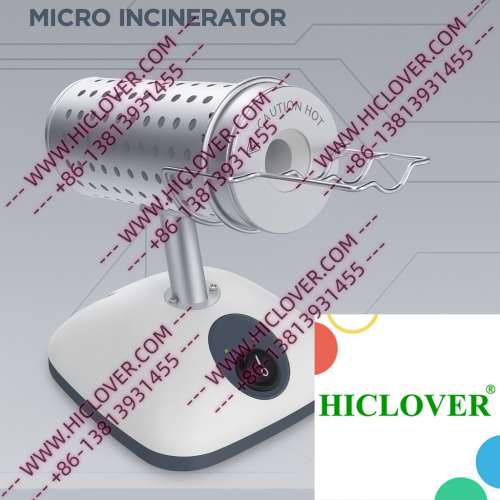
The Micro Incinerator, or Infrared Inoculating Loop Sterilizer, uses advanced infrared heat technology to achieve rapid thermal sterilization of laboratory tools. Unlike traditional flame sterilizers such as alcohol lamps or Bunsen burners, which can produce harmful aerosols and are less efficient in clean environments, the Micro Incinerator features an enclosed ceramic heating chamber designed for high-temperature disinfection without flame exposure. This design enhances contamination control, making it compliant with strict laboratory standards.
Key Features of the Micro Incinerator
- Enclosed Ceramic Tube: The insulated chamber maintains high temperatures, ensuring effective sterilization within minutes.
- Clean-Bench-Safe: The device eliminates the risk of flame-related hazards, making it suitable for use in biosafety cabinets and other sensitive environments.
- Aerosol-Free Handling: Reduces contamination risks associated with open flames, particularly in BSL-2 and BSL-3 labs.
- Portability: Compact design allows easy transport and usage in field settings or mobile labs.
- How does a Micro Incinerator work?
It uses infrared heating to sterilize tools rapidly, providing a safe environment without open flames. - What are the advantages of using a Micro Incinerator over traditional candling methods?
It significantly reduces contamination risks and is safer for use within clean labs. - Can Micro Incinerators be used in field environments?
Yes, their portability makes them ideal for mobile labs and field-testing settings in remote areas. - What regulations should be considered when using sterilization equipment?
Users must comply with WHO biosafety standards and local health regulations to ensure safety and effectiveness. - What are the maintenance requirements for a Micro Incinerator?
Regular cleaning and occasional inspections are recommended to ensure optimal performance.
Application Scenarios in Laboratories
Micro Incinerators are highly versatile and can be effectively utilized in various laboratory settings:
1. Biosafety Cabinets in Microbiology Labs
In BSL-2 and BSL-3 microbiology labs, where the handling of pathogenic organisms occurs, maintaining a sterile environment is paramount. The Micro Incinerator serves as an essential tool for sterilizing inoculating loops and other instruments in biosafety cabinets. Its rapid heating capability allows for immediate reuse, minimizing the time spent away from sterile environments, which is crucial for maintaining experiment integrity.
2. Field Testing Laboratories
In remote or field testing labs, especially in rural regions of Cameroon, effective waste management becomes imperative. Portable Micro Incinerators are invaluable for sterilizing waste materials and tools on-site. This reduces the volume of hazardous waste that needs to be transported, thus simplifying logistics and enhancing environmental sustainability. By employing these sterilizers, field labs can ensure compliance with WHO biosafety standards while effectively controlling contamination.
Compliance and Environmental Considerations
WHO Biosafety Standards dictate that sterilization practices must minimize exposure to infectious materials. The use of Micro Incinerators aligns with these guidelines, as they provide an efficient alternative to traditional flame sterilization methods. Furthermore, regulations in clinical settings necessitate that no open flames are used within clean rooms, making Micro Incinerators the ideal solution for achieving necessary sanitation without compromising safety.
In addition, local regulatory bodies in Cameroon support the implementation of waste management practices that align with international standards. The presence of mobile Micro Incinerators can significantly contribute to reducing healthcare waste footprints while ensuring that essential safety requirements are met.
Comparative Analysis: Micro Incinerators vs. Flame Burners
| Feature | Micro Incinerator | Flame Burners |
|---|---|---|
| Heating Method | Infrared Heat | Open Flame |
| Contamination Risk | Minimal | High due to aerosol generation |
| Portability | High | Moderate |
| Temperature Control | Automated | Manual |
| Usage in Clean Environments | Optimal | Not recommended |
Frequently Asked Questions
Conclusion
Micro Incinerators represent a major leap forward in laboratory sterilization and waste management practices, particularly in regions like Cameroon. Their ability to enhance biosafety, facilitate compliance with international standards, and provide efficient waste disposal in both laboratory and field settings underscores their importance. For distributors, hospitals, universities, and NGOs, investing in a Micro Incinerator is a step towards not only improving lab environments but also empowering communities to tackle waste management challenges sustainably.
For more information on how you can integrate a Micro Incinerator into your laboratory settings, please reach out to us today!
Categories:
Tags: