
In today’s progressive healthcare landscape, ensuring patient safety holds paramount importance. As healthcare professionals advocate for effective contamination control, laboratories are under increased pressure to adopt reliable sterilization practices. Traditional methods, such as alcohol lamps and Bunsen burners, are rapidly becoming obsolete due to their inherent risks, including open flames and smoke emissions. Here, loop sterilizers, particularly the Micro Incinerator / Infrared Inoculating Loop Sterilizer, emerge as a game-changer in laboratory sterilization, setting new standards for safety, efficiency, and compliance.
Practical Laboratory Biosafety Challenges
Laboratories, particularly those operating under Biosafety Level 2 (BSL-2) and Biosafety Level 3 (BSL-3) conditions, are tasked with stringent biosafety protocols to prevent biological hazards. One of the primary challenges is the effective sterilization of inoculating loops and other instruments without compromising lab air quality or introducing contaminants through smoke. The demand for improved sterilization workflows has never been higher, particularly in settings where pathogens are handled, making the transition to advanced sterilization technologies essential.
Technical Principle: Infrared Heat and Innovative Design
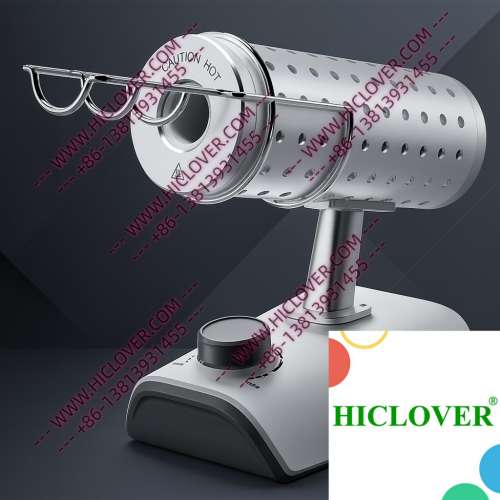
The Micro Incinerator / Infrared Inoculating Loop Sterilizer employs cutting-edge infrared high-temperature disinfection technology to achieve rapid thermal sterilization. This device features a ceramic heating chamber that rapidly reaches sterilizing temperatures, enabling effective decontamination of inoculating loops in seconds. Unlike traditional flame sterilizers, this advanced design ensures an enclosed environment, effectively reducing the risks associated with aerosol generation and open flames.
- Enclosed Ceramic Tube: The ceramic tube confines the heat, providing targeted sterilization while minimizing the risk of burns or flare-ups.
- Rapid Heating Capability: Achieves sterilizing temperatures in mere seconds, drastically improving workflow efficiency.
- No Open Flames: Provides a clean-bench-safe operation ideal for sterile environments, eliminating potential hazards associated with traditional flame methods.
Application Scenarios in Modern Laboratories
Biosafety Cabinets
In microbiological labs, the use of a Micro Incinerator within biosafety cabinets enhances sterility while safeguarding both personnel and samples. The device’s aerosol-free handling reduces the risk of airborne contamination, which is especially critical when working with pathogenic microorganisms. In such settings, research and clinical diagnostics labs can maintain stringent biosafety protocols without compromising on the accuracy of their work.
University Teaching Labs
During practical sessions in university teaching labs, students are often required to demonstrate their capabilities in sterilization techniques. Utilizing infrared inoculating loop sterilizers allows educators to showcase best practices in biosafety while promoting safe handling techniques. The ease of use ensures that students can focus on their experiments without the distractions or hazards posed by flame-based sterilization.
Compliance and Environmental Considerations
Adhering to WHO biosafety regulations and laboratory sterilization standards is crucial in medical and research facilities. The integration of Micro Incinerators aligns with these compliance requirements by providing safe and effective sterilization methods. Unlike traditional flame burners, which can release harmful particulates and require extensive cleanup, infrared sterilizers support cleanroom operations by eliminating flame and smoke. This ensures that laboratory environments remain pristine and compliant with rigorous health and safety standards.
Advantages Over Traditional Flame Sterilizers
Here’s a comparison of the Micro Incinerator with traditional flame sterilizers:
| Feature | Micro Incinerator | Traditional Flame Sterilizers |
|---|---|---|
| Heating Method | Infrared, ceramic enclosed | Open flame |
| Heating Time | Seconds | Variable |
| Aerosol Generation | None | High |
| Risk of Burns | Low | High |
| Maintenance | Low | Moderate to High |
FAQs About Micro Incinerators
1. What makes a Micro Incinerator safer than traditional sterilizers?
The Micro Incinerator eliminates open flames and reduces the risk of contamination, ensuring a safer working environment, especially in sterile and BSL conditions.
2. How long does it take to sterilize an inoculating loop with this technology?
Typically, the Micro Incinerator can achieve sterilization within seconds, significantly quicker than traditional methods.
3. Are there specific cleaning requirements after using a Micro Incinerator?
Maintenance is minimal; however, it is essential to regularly check the ceramic heating chamber for any residue buildup that may affect performance.
4. Can this device be used in field testing labs?
Yes, the portability and rapid sterilization capabilities of the Micro Incinerator make it ideal for use in mobile or field testing scenarios.
5. What are the benefits of using infrared technology in laboratories?
Infrared technology provides high-temperature sterilization without the hazards associated with flames, resulting in cleaner, safer, and more efficient lab environments.
Conclusion
As Sweden’s healthcare and research sectors continue to evolve, so too must the methods we utilize to ensure patient safety. The Micro Incinerator / Infrared Inoculating Loop Sterilizer represents a significant advancement in laboratory sterilization equipment, addressing the pressing needs for compliance, safety, and workflow efficiency. For laboratories seeking to implement cutting-edge practices that prioritize patient safety, we encourage you to explore the potential of this innovative sterilization solution. Contact us today to learn more about how the Micro Incinerator can revolutionize your sterilization processes.
Categories:
Tags: