
Laboratories today face increasing challenges in maintaining biosafety and effective sterilization amidst a growing demand for contamination control. As research activities expand and workflows become more intricate, laboratory sterilization equipment, particularly the Micro Incinerator or Infrared Inoculating Loop Sterilizer, plays a pivotal role in ensuring a safe working environment. This article delves into the efficacy of these sterilizers, their technical principles, applications, compliance standards, and the advantages they offer over traditional flame sterilizers.
Biosafety Challenges and Workflow Demands
In an era where biological research and clinical diagnostics are at the forefront of scientific advancement, labs must meet strict biosafety standards. The need for effective sterilization tools is paramount to prevent cross-contamination and ensure the integrity of experimental results. Traditional methods, including alcohol lamps and Bunsen burners, although widely used, come with risks. Open flames can generate aerosols and pose a threat in clean room environments, making them unsuitable for many laboratory settings, particularly in BSL-2 and BSL-3 microbiology labs.
Technical Principle of Infrared Inoculating Loop Sterilizers
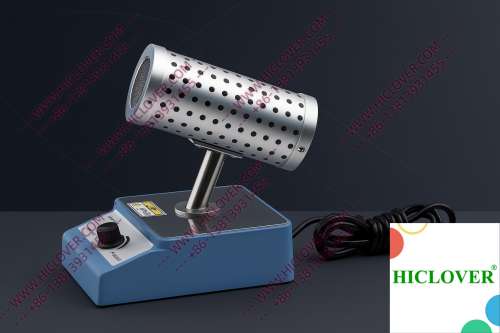
The Micro Incinerator utilizes infrared high-temperature disinfection technology, which allows for rapid thermal sterilization. Unlike traditional flame burners, it employs a clean and enclosed ceramic heating chamber to achieve the desired sterilization effect without the hazards associated with open flames. This innovative method not only ensures safety but also promotes efficient workflow in labs.
Key features of this sterilization equipment include:
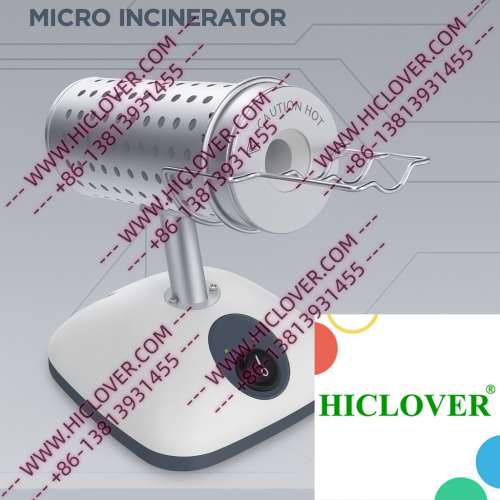
- Rapid sterilization: Achieves effective sterilization in seconds.
- Ease of use: Simple operation enhances workflow efficiency.
- Aerosol-free handling: Minimizes contamination risks.
- Clean-bench-safe: Suitable for use in biosafety cabinets.
Application Scenarios in Laboratories
Biosafety Cabinets
In microbiology labs, the Micro Incinerator can be stationed within a biosafety cabinet to provide a safe environment for sterilizing inoculating loops. Its aerosol-free handling ensures that no harmful particles are released, safeguarding both personnel and samples. The ability to operate without flames further enhances the safety profile within the clean workspace.
University Teaching Labs
In educational institutions, the Micro Incinerator serves as an essential tool for microbiology students to practice sterile techniques without the risks associated with flame-based sterilization. Students can observe and engage with rapid thermal sterilization, promoting an understanding of modern sterilization technologies. Additionally, instructors appreciate the fact that this equipment adheres to safety protocols, allowing for seamless integration into the curriculum.
Compliance and Environmental Standards
Adhering to the World Health Organization (WHO) biosafety standards, as well as laboratory sterilization regulations, is critical for all laboratory operations. The Micro Incinerator aligns with these standards, providing a reliable means of ensuring that sterilization processes do not compromise safety or environmental integrity. Furthermore, in environments where flame use is restricted, such as clean rooms and CO₂ incubators, the Micro Incinerator is the ideal alternative for sterilizing equipment and tools.
Comparison of Micro Incinerator and Traditional Flame Burners
| Feature | Micro Incinerator | Flame Burners |
|---|---|---|
| Safety | High – enclosed design mitigates aerosol risks | Moderate – open flame can cause accidents |
| Efficiency | Rapid thermal sterilization in seconds | Varies – requires monitoring of flame |
| Usability in Clean Areas | Ideal for biosafety cabinets and clean rooms | Not recommended |
| Initial Cost | Higher initial cost but long-lasting | Lower initial cost but shorter lifespan |
FAQs
- What is a Micro Incinerator?
-
A Micro Incinerator is a sterilization device that utilizes infrared heat to sterilize inoculating loops and other laboratory tools quickly and efficiently, without the use of open flames.
- How does an Infrared Inoculating Loop Sterilizer work?
-
This device uses a ceramic heating chamber that generates high temperatures through infrared radiation to achieve rapid thermal sterilization.
- Why choose a Micro Incinerator over traditional flame sterilizers?
-
Micro Incinerators provide a safer, more efficient means of sterilization, reducing contamination risks and being more suitable for biosafety environments.
- Where can I use Micro Incinerators?
-
They are effective in university teaching labs, clinical diagnostic centers, and field testing labs.
- Are Micro Incinerators compliant with biosafety standards?
-
Yes, they comply with WHO biosafety regulations and are safe for use in BSL-2 and BSL-3 laboratory environments.
Conclusion
Increased laboratory safety is crucial in today’s rapidly evolving scientific landscape. The Micro Incinerator / Infrared Inoculating Loop Sterilizer emerges as an essential tool for laboratories striving for high standards of biosafety and efficient sterilization processes. As the demand for reliable laboratory sterilization equipment rises, integrating the Micro Incinerator into your workflow not only assures compliance with safety standards but also enhances operational efficiency. For more information or to make an inquiry about purchasing this critical equipment for your lab, please contact us today!
Categories:
Tags: