
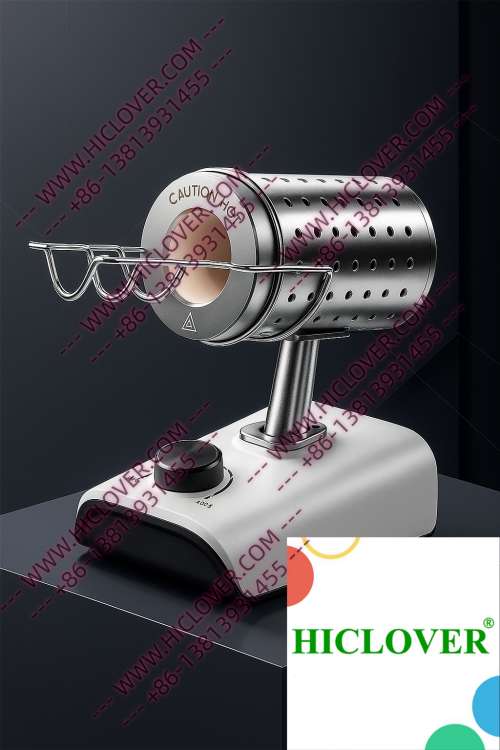
In the realm of laboratory biosafety, professionals face myriad challenges related to contamination control and effective sterilization workflows. With increasing regulations in healthcare environments and the need to maintain sterile conditions, especially in clinical diagnostics and research, laboratory personnel seek advanced solutions to meet their sterilization needs. Enter the Micro Incinerator / Infrared Inoculating Loop Sterilizer—an essential tool that epitomizes the pinnacle of modern sterilization technology.
Challenges in Laboratory Biosafety
Laboratories, particularly those operating under Biosafety Level 2 (BSL-2) and BSL-3 conditions, necessitate the highest standards of cleanliness and safety. Traditional sterilization methods, such as alcohol lamps and Bunsen burners, often pose challenges, including the risk of flame-related accidents, uneven heating, and the release of harmful aerosols. These hazards can significantly compromise laboratory environments, leading to safety breaches and errors in experimental integrity.
Technical Principles of the Micro Incinerator
The Micro Incinerator employs infrared heat technology, utilizing an enclosed ceramic tube to achieve rapid thermal sterilization. Unlike traditional flame sterilization, this device provides uniform heating without the risk of open flames or aerosol generation, making it particularly suitable for clean-bench-safe operations. The infrared heating method incorporates high-temperature disinfection, ensuring that inoculating loops and other lab instruments are effectively sterilized within seconds.
Key Features
- Rapid thermal sterilization
- Enclosed ceramic heating chamber for enhanced safety
- No-flame operation for contamination prevention
- Temperature control for optimal sterilization
- Lightweight and portable design for field applications
Application Scenarios in Real Laboratories
1. Biosafety Cabinet Use: In clinical diagnostics labs, the Micro Incinerator is employed within biosafety cabinets to ensure quick sterilization of inoculating loops before transferring cultured samples. Its compact size allows it to fit seamlessly into laboratory workflows, ensuring that the risk of contamination is minimized while improving efficiency.
2. Field Testing: Mobile laboratories conducting field tests, especially for environmental monitoring or disease outbreak investigations, benefit immensely from the portability of the Micro Incinerator. Having a reliable sterilization method on-site allows researchers to conduct experiments without the need for traditional flame sources, which may be impractical in outdoor settings.
Compliance with Biosafety Standards
Compliance with international biosafety regulations, such as those stipulated by the World Health Organization (WHO), is paramount for laboratories worldwide. The advanced sterilization mechanism of the Micro Incinerator ensures adherence to stringent lab sterilization standards, allowing it to operate safely in clean rooms where flames are prohibited. This compliance not only enhances laboratory safety but also protects the integrity of sensitive experiments, making it an invaluable addition to any facility dedicated to high-quality research.
Comparison of Sterilization Methods
The advantages of the Micro Incinerator over traditional flame sterilizers are clear. See the table below:
| Feature | Micro Incinerator | Traditional Flame Sterilizers |
|---|---|---|
| Operation Type | Infrared heat | Open flame |
| Contamination Risk | Low | High |
| Ease of Use | User-friendly, rapid | Requires careful handling, slower |
| Portability | Highly portable | Bulkier, immobile |
| Temperature Control | Precise | Variable |
Frequently Asked Questions
- What is the primary advantage of using a Micro Incinerator over a Bunsen burner?
The Micro Incinerator provides rapid, safe sterilization without an open flame, reducing contamination risks significantly. - Can the Micro Incinerator be used in field tests?
Absolutely! Its lightweight and portable design make it an ideal tool for mobile and field testing laboratories. - What laboratory environments are best suited for a Micro Incinerator?
This equipment is perfect for clinical diagnostics, university teaching labs, and BSL-2/BSL-3 microbiology labs. - Does the Micro Incinerator comply with WHO biosafety standards?
Yes, it adheres to international biosafety regulations, making it suitable for clean rooms and sensitive research environments. - How long does it take to sterilize an inoculating loop?
The Micro Incinerator typically sterilizes an inoculating loop in mere seconds, allowing for efficient workflow.
Conclusion
As laboratories across different sectors increasingly prioritize safety and efficiency, the Micro Incinerator / Infrared Inoculating Loop Sterilizer stands out as a reliable ally in infection control and laboratory management. Its innovative design, high compliance with biosafety standards, and practicality make it a crucial asset for hospitals, universities, and research centers. Don’t hesitate—connect with us today or explore our range of sterilization solutions to equip your laboratory with this indispensable tool!
Categories:
Tags: