
As laboratory practices evolve, so do the challenges of maintaining biosafety and effective sterilization workflows. The increasing demand for efficient waste treatment solutions in the UAE’s growing healthcare and research sectors prompts a need for innovative products. Micro incinerators, especially the Micro Incinerator / Infrared Inoculating Loop Sterilizer, emerge as key instruments addressing these challenges while ensuring compliance with biosafety standards.
The Technical Backbone: How Micro Incinerators Operate
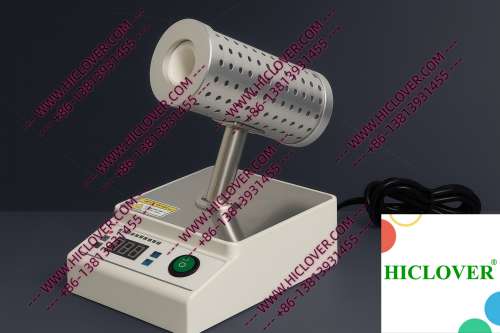
Micro incinerators utilize infrared technology to deliver rapid thermal sterilization, effectively eliminating biological contaminants without the limitations associated with traditional equipment. The core technical principle involves an enclosed ceramic heating chamber that radiates high temperatures, providing an efficient and clean-burning method of disinfection. Unlike alcohol lamps and Bunsen burners, which produce flames that can compromise sterile environments, the micro incinerator functions as a clean-bench-safe device that minimizes aerosol production while maximizing effectiveness.
Unpacking the Product Configuration
The Micro Incinerator features an ergonomic design tailored for various laboratory settings. Its compact nature makes it suitable for use in biosafety cabinets and clinical laboratories, where space and sterilization accuracy are essential. The unit typically includes:
- Infrared heating elements for effective contamination control
- An easy-to-read LED display for temperature monitoring
- A lightweight and portable structure for field applications
- Safety locks to prevent accidental activation
Application Scenarios: Real-World Use Cases
Consider a university teaching lab where microbiology students learn about aseptic techniques. In such environments, the Micro Incinerator proves invaluable for sterilizing inoculating loops and other instruments quickly, ensuring a high standard of safety. Its use reduces the risk of contamination, allowing students to focus on learning without the concern of improper sterilization.
Another vital application lies in field testing labs, particularly in the UAE’s remote health initiatives, where laboratories are often set up under less stringent conditions. The mobile capability of the Micro Incinerator ensures that researchers can conduct tests on-site without transport-related contamination risks. Its compact design allows for easy transport, making it an essential tool for outdoor biological assessments.
Compliance and Environmental Considerations
Micro incinerators align with several biosafety guidelines, notably those outlined by the World Health Organization (WHO) and various laboratory sterilization standards. For instance, in BSL-2 and BSL-3 microbiology labs where the risk of biohazard exposure is heightened, the absence of open flames is critical. The Micro Incinerator not only meets these crucial requirements but also contributes to an environmentally friendly approach by reducing the carbon footprint associated with other sterilization methods.
Additionally, in clean room environments, the use of micro incinerators mitigates contamination risks because they do not produce aerosols which might harbor microorganisms, making them an optimal choice for sensitive laboratory operations.
Advantages Over Traditional Flame Sterilizers
When comparing micro incinerators to traditional flame sterilizers like alcohol lamps and Bunsen burners, several advantages emerge:
| Feature | Micro Incinerator | Flame Burners |
|---|---|---|
| Temperature Control | Precise infrared heat management | Variable flame intensity |
| Aerosol Production | Minimal, safe handling | High aerosol dispersion risk |
| Mobility | Portable for field use | Requires stable surfaces |
| Safety | Flame-free operation | Fire hazard risk |
FAQs: Understanding Micro Incinerators
What is a micro incinerator and how does it work?
A micro incinerator is a thermal sterilization device that uses infrared technology to disinfect laboratory instruments without producing an open flame.
Why should I choose a micro incinerator over traditional flame sterilizers?
Micro incinerators provide enhanced safety, precise temperature control, and reduced aerosol generation, making them ideal in sterile environments.
Where can micro incinerators be used?
They can be employed in BSL-2 and BSL-3 microbiology labs, mobile testing facilities, or educational environments like university teaching labs.
Are micro incinerators compliant with laboratory standards?
Yes, they comply with WHO biosafety guidelines and laboratory sterilization standards, ensuring safe handling and operation.
What is the portability of a micro incinerator?
Micro incinerators are designed for easy transport, making them applicable in various field testing and remote laboratory settings.
Conclusion: Driving Innovation in Waste Treatment
The future of laboratory waste management in the UAE lies in the adoption of advanced technologies like micro incinerators. By effectively addressing sterilization challenges while adhering to stringent biosafety standards, they are set to become indispensable tools in healthcare and research facilities alike. For comprehensive solutions tailored to your cleaning and sterilization needs, consider integrating a Micro Incinerator into your laboratory workflow today.
Categories:
Tags: