
In the ever-evolving landscape of laboratory and clinical protocols, the challenge of biosafety and effective sterilization remains paramount. Russian healthcare standards necessitate rigorous contamination control measures, particularly within laboratory environments. This has led to increased adoption of advanced sterilization technologies, such as the Infrared Inoculating Loop Sterilizer, or Micro Incinerator, which enhance the efficiency of sterilization workflows while safeguarding health.
Understanding Infrared Sterilization Technology
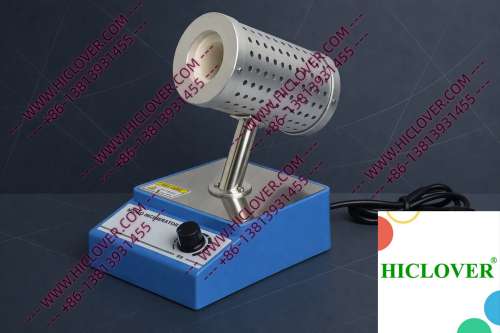
The Infrared Inoculating Loop Sterilizer operates on high-temperature sterilization principles, utilizing infrared heating to provide a rapid and focused heat source to sterilize inoculating tools. Unlike traditional flame sterilizers such as Bunsen burners or alcohol lamps, which require open flames and can produce aerosolized particles, the Micro Incinerator features an enclosed ceramic tube that efficiently directs infrared energy, achieving rapid thermal sterilization without the risks associated with flame use.
The innovative design promotes air cleanliness by minimizing potential contaminants released into the environment during the sterilization process. The ceramic heating chamber within the device ensures consistent and high-temperature disinfection, effectively eliminating microbial life while maintaining a clean working space.
Applications of Micro Incinerators in Laboratory Settings
1. University Teaching Labs
In academic environments, such as those found in major universities across Moscow and Saint Petersburg, the need for sterile techniques is vital for student and faculty safety. The Infrared Inoculating Loop Sterilizer is incorporated into microbiology courses where students utilize inoculating loops to transfer cultures. This ensures a reliable method of sterilization that is free from the complexities and hazards posed by flame sterilizers. Under supervision, students can perform hands-on experiments while adhering to stringent biosafety standards.
2. Clinical Diagnostics in BSL-2 Labs
In BSL-2 clinical diagnostic labs, where the handling of pathogens is a regular occurrence, environmental safety is crucial. The Micro Incinerator assists laboratory personnel in maintaining a sterile environment through its rapid sterilization capabilities. It is vital for the immediate decontamination of loops and tools between samples, thus reducing the risk of cross-contamination. This technology seamlessly integrates into existing workflows, allowing lab technicians to focus on diagnostics rather than sterilization concerns.
Compliance with Biosafety Standards
Adherence to health and safety regulations is non-negotiable in laboratory operations, especially within Russia. The World Health Organization (WHO) has set stringent biosafety standards to safeguard laboratory personnel and the environment. These standards emphasize the need for effective sterilization equipment that minimizes risks.
Utilizing devices like the Micro Incinerator meets these stringent guidelines by offering aerosol-free handling and eliminating open flames in clean rooms. Such compliance not only pertains to safety but also to environmental considerations, aligning with global practices aimed at reducing contamination risks. For laboratories operating under BSL-2 or BSL-3 classifications, the data supports the shift from traditional flame sterilizers to more efficient infrared sterilization methods.
Comparing Micro Incinerators to Traditional Flame Sterilizers
| Feature | Micro Incinerator | Flame Sterilizers |
|---|---|---|
| Heating Method | Infrared Heat | Open Flame |
| Environmental Safety | Enclosed, Aerosol-Free | Open, Aerosol Generation |
| Temperature Control | Consistent, High-Temperature | Variable, Dependent on User |
| Ease of Use | Simple, Quick Operation | Requires Training and Care |
| Operational Costs | Low | Potentially High (fuel, safety equipment) |
Frequently Asked Questions
- What is the operating principle of the Micro Incinerator? – The Micro Incinerator utilizes infrared heating technology to achieve rapid sterilization without open flames.
- How does the Micro Incinerator compare to flame sterilizers in terms of safety? – The Micro Incinerator significantly reduces contamination risks as it operates in an enclosed environment, eliminating aerosol production.
- Is the Micro Incinerator suitable for field testing? – Yes, its compact and efficient design allows for easy transportation and use in field testing scenarios.
- Can the Micro Incinerator be used in BSL-3 environments? – Absolutely. Its features align well with the stringent sterilization requirements of BSL-3 laboratories.
- What are the advantages of using infrared sterilization? – Advantages include rapid thermal sterilization, enhanced safety, decreased contamination risks, and simplified sterilization workflows.
Conclusion
The advancements in loop sterilization technology, particularly through the use of the Infrared Inoculating Loop Sterilizer, represent a significant evolution in Russian healthcare standards and laboratory practices. As laboratories increasingly transition away from traditional flame sterilizers to more efficient and safer options, they not only enhance their operational efficiency but also promote higher biosafety compliance standards.
For those interested in upgrading their sterilization processes, consider integrating the Micro Incinerator into your lab’s setup. Contact us today or explore our offerings to ensure that your laboratory meets the highest standards of safety and efficiency.
Categories:
Tags: